
A Stone to Story Feature
A Quiet Copper Story in Western Nevada
Most people drive through Smith Valley without ever knowing the hills carry a copper story unlike any other in the American West. There are no open pits here, no tourist brochures, and no roadside rock shops pointing toward famous mines. Instead you find scattered pockets of brilliant blue and green tucked into dark, iron rich stone. Pieces that seem to glow even before you pick them up.
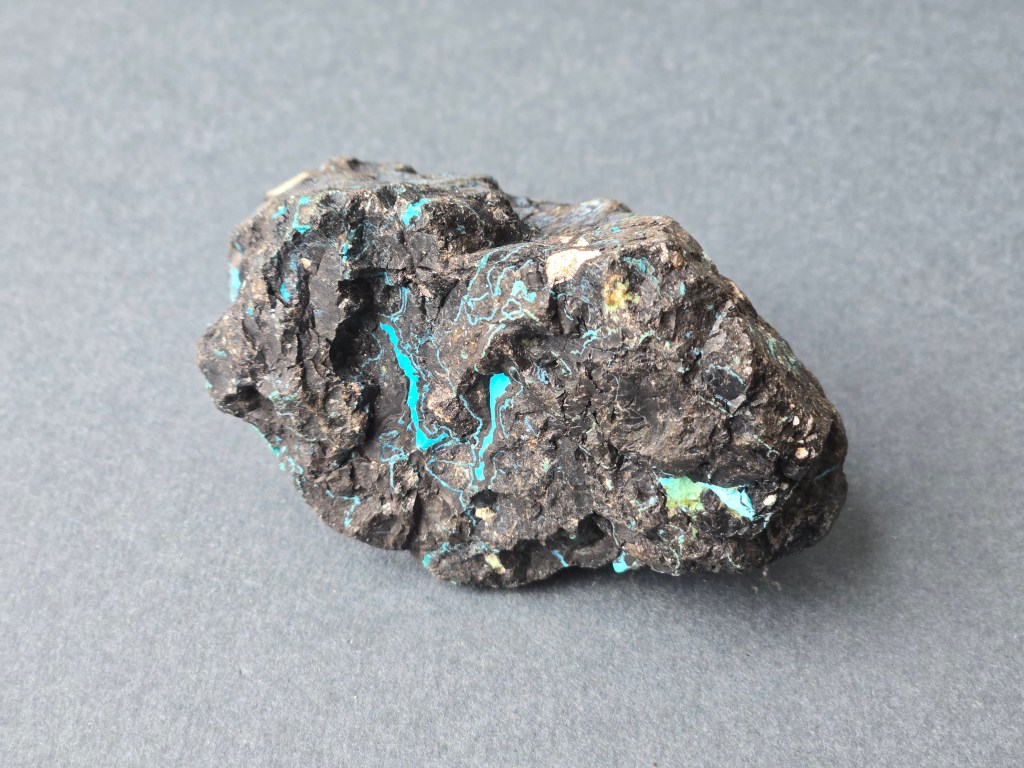
When I first held a Smith Valley copper specimen, the contrast felt almost theatrical. The black matrix was so deep it looked wet. The chrysocolla looked lit from within. You do not see this combination in Arizona or Morocco. You do not really see it anywhere else.
And the more I learned about this valley, the clearer the reason became. This place has always attracted the quiet prospectors. The patient ones. The ones who moved through the land the way water moves through fractures underground.
The Man Who First Noticed the Black Stone
One of them was Hank Doolan, a prospector whose story rarely appears outside obscure Nevada mining journals. Hank drifted through the Great Basin in the early 1900s, following rumors of copper from Tonopah to Mason Valley. According to a handwritten note found in an old Yerington ledger, Hank spent several seasons exploring the ridges east of Smith Valley.
He describes something remarkable:
“Blue seams in black ironstone. Not the usual green in sandstone. Something different in the gut of this country.”
Most prospectors of the era ignored rock like this. Magnetite rich stone looked too tough and too sparse for commercial copper. But Hank kept coming back. He was convinced the valley held something rare, even if not minable on a large scale. He sold only a few small pockets of material, but his notes map out the earliest known mentions of copper in the very same dark host rock that defines your modern specimens.
Hank never struck it rich, but collectors today unknowingly follow the same trail he once walked.
Why Smith Valley Never Became a Mining District
Copper does not behave the same in every part of Nevada. In places like Ely, Ruth, or Yerington, you find big porphyry systems that lend themselves to industrial mining. Smith Valley is different. Its copper formed in small fractures inside volcanic and metamorphosed rocks. These pockets are narrow, high grade, and scattered like hidden clues rather than continuous ore bodies.
To a mining engineer, that meant the valley was unprofitable.
To a mineral collector, it means the pieces here feel like art.
The copper minerals fill hairline cracks, cooling slowly in the dark stone. That slow process creates thick bands of chrysocolla and azurite that pop against the nearly black matrix. Each specimen becomes a small window into a geological moment that took centuries to form.
Why Nevada Copper Looks Nothing Like Arizona or Morocco
Arizona
Copper deposits in Arizona form around enormous porphyry systems. The rocks there are lighter, ranging from tan to reddish brown. Copper minerals form in open voids or along broad oxidation zones. Many specimens come from byproducts of large mining operations.
Arizona blues are soft, blended, and wide spread across the matrix.
Morocco
Morocco’s famous deposits (like Bou Azzer) sit in hydrothermal veins influenced by cobalt and nickel. The rocks are lighter, more fractured, and produce highly crystallized azurite and malachite. These pieces are bold and showy, but rarely dark.
Moroccan material glitters, but it does not brood.
Smith Valley, Nevada
Nevada’s story is completely different.
Here, the host rocks are rich in magnetite and hematite. They are so dark they look like ink when wet. Copper travels through tiny fractures, leaving behind vivid blue and green mineral bands that seem to hover on the surface. The contrast is so strong it almost looks digital.
Collectors often assume these pieces are treated because the saturation is so intense. But they are natural. The darkness of the matrix amplifies everything around it.
This black matrix is the valley’s fingerprint. A geological signature that sets it apart from every major copper locality in the world.
Why These Specimens Capture Attention
People react strongly to Smith Valley copper for two reasons:
1. The contrast is unmatched
The deep black host rock makes the colors visually electric. In person, the material feels more alive than pieces from Arizona or Morocco.
2. The pieces feel personal
Every specimen is a small pocket, never a mass mined deposit. They come from single ridgelines, old cuts, or tiny exposures weathering out of the ground. They carry the same intimacy as a handwritten note from a century ago.
Even now, when I handle a new Smith Valley piece, I think of Hank Doolan moving through this valley with only a canvas satchel and a quiet belief that beauty lived somewhere in the dark stone.
He was right.
The Copper Trail Continues
Today, most of Smith Valley’s copper activity happens at the smallest scale. Quiet collectors, local rock shops, and story driven businesses like Stone to Story keep this micro district alive. Not through blasting or bulk extraction, but through appreciation. Through careful collecting. Through the understanding that some of the best mineral stories are found in places that never made headlines.
When I look at your Smith Valley pieces, I see the same things Hank noticed over a century ago.
Blue veins. Black stone. Something different in the gut of this country.
These are not common minerals from famous mines.
They are quiet discoveries from a valley that rewards the slow observer.
And that is exactly the kind of story worth sharing.
 stonetostory.com
Leave a comment